

News &
Insights
20 February 2026
Advancing digital endpoints in paediatric rare disease
Addressing silos in rare condition research. Today, there is no reliable biomarker or validated endpoint for STXBP1.
Share This Post, Choose Your Platform!

Advancing digital endpoints in paediatric rare disease trials – addressing silos in rare condition research
“Today, there is no reliable biomarker or validated endpoint for STXBP1. Most studies rely on seizure frequency, which is problematic, not all children have seizures, and even when they do, it’s a noisy and difficult measure. EEG is complex, and parent reports, while critical, are not scientific endpoints. We know there is a strong link between STXBP1 and motor dysfunction, so establishing a continuous, objective way to measure movement could be transformative for the field. Using a standardised framework also helps ensure alignment with regulatory expectations.”
Sagi Gidali, Founder and Tech Entrepreneur, Rafa’s Moonshot
“When Rafa’s team approached us, we recognised very quickly that their measurement challenges were similar to those we had seen in other disease conditions both in paediatric and adult populations. While resources available to invest in rare diseases can be limited, we found a collaborative and cross-functional approach that allowed us to get much closer to understanding the challenges of those living with and around STXBP1.”
Joss Langford, Chief Technical Officer, ActivInsights
In 2025, ActivInsights, in collaboration with DiMe’s Core Measures team, began to address an unmet need: lack of validated biomarkers in paediatric rare disease research, which limits clinical trial design and meaningful endpoints and thus significantly hinders the development of effective treatments.
DiMe initiated this project to advance the use of sensor-based digital health technologies in addressing research gaps in paediatric rare diseases, such as STXBP1, and developed a framework for ‘Core Digital Measures for Paediatric Rare Diseases’. Designed to address the fragmentation in research, the framework is intended to capture the most relevant signs and symptoms that are meaningful to the daily lives of children with rare diseases.
Read on to learn about ActivInsights’ involvement in this important project and how working with Rafa’s team has helped to contribute to the development of these standardised core measures.
Meet the collaborators
Rafa’s Moonshot
Rafa’s Moonshot is a patient-led research organisation advancing therapies for STXBP1, a rare neurodevelopmental disorder caused by mutations in the STXBP1 gene, which plays a critical role in brain development. Founded by a tech entrepreneur father and a neurologist mother, the organisation brings together execution, speed and clinical insight to connect families, clinicians, and researchers, and to accelerate translational research and the measurement of meaningful clinical change.
Activinsights
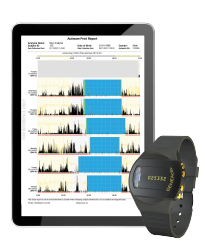
Activinsights is a global leader in digital health technologies, specialising in professional-grade wearables and data analytics. Focusing on clinical trials and academic research, they provide tools that move beyond subjective reporting to empower researchers with precise, raw-data insights that capture the reality of patient life. For the STXBP1 study, their GENEActiv wearable is being used to capture objective motor function data.
DiMe Core Measures for Paediatric Rare Disease Project
The Digital Medicine Society (DiMe) is a global non-profit and the professional home for digital medicine. They drive the broad adoption of digital approaches to advance the practice of medicine to enhance public health. DiMe has developed a framework for ‘Core digital measures for paediatric rare diseases’, designed to help identify measurement priorities, support more efficient and consistent evidence generation, and enable the development and evaluation of therapies for the children who need them most.
How ActivInsights technologies are bringing new biomarkers to paediatric rare diseases
ActivInsights’ collaboration with DiMe’s Core Measures team and the subsequent development of a framework for ‘Core Digital Measures for Paediatric Rare Diseases’, has allowed the definition of core digital measures for clinical research, with the long-term goal to help expedite the development of life-saving therapies and to help improve pipeline prioritisation in the pharmaceutical industry.
This is especially important for clinical trials in conditions such as STXBP1 where there remains a lack of validated endpoints and biomarkers. Patients who have the rare neurodevelopmental condition can experience symptoms like tremor and motor abnormalities, which can be measured objectively by wearables like our GENEActiv.
Not all devices deliver raw data, but the GENEActiv provides unfiltered, high-resolution, tri-axial raw accelerometry data. It is designed to provide long-term, continuous monitoring, which is especially crucial in STXBP1 – where symptoms can occur throughout the day, and continuous assessment allows a more reliable and meaningful way to capture data.
Data generated by our validated wearables allow researchers to uncover hidden patterns and correlations and ultimately allow advancements in clinical care. With the provision of high-resolution data collection techniques, clinical trials are supported in gathering better evidence – continuously in real-world settings.
Our professional, medical-grade wearables are specially designed for health research with minimal patient burden and a comfortable design – ideal for measurement of movement disorders. The ease of use of our technologies has led to industry-high adherence rates, allowing research teams to gather more data for both participants and research sites.
Our established experience in remote monitoring has seen our technology validated in over 1,500 peer-reviewed scientific papers across more than 25 therapeutic areas, including paediatrics, behaviour change, immunology, and many more.
To conclude, the opportunity for ActivInsights to contribute to DiMe’s project to define core digital measures in the paediatric rare disease space has a truly great aim: to support more efficient and consistent evidence generation in paediatric clinical trials and to aid the development and evaluation of therapies for the children who need them most.
We hope our digital health technologies will help set in motion a chain of events leading to more decentralised clinical trials with high-quality data collection. This would enable children with rare diseases not only to participate in clinical trials, but ultimately to gain access to life-saving treatments developed from those trials.
By helping to define a core set of digital measures, our wearables will contribute to a practical path forward in paediatric rare-disease research by:
- Generating clinically meaningful evidence that is operationally feasible in small paediatric cohorts
- Reducing the burden on clinical trial sites and caregivers by supporting hybrid or fully decentralised trials, thereby allowing broader inclusion of participants
- Enabling earlier and more sensitive detection of change. This may be particularly important in neurodevelopmental disorders such as STXBP1, where motor features like gait instability and tremor currently lack robust tools for quantification
Learn more about the collaboration and STXBP1 research in a recent interview featuring Lucy Cesnakova of DiMe, Joss Langford of ActivInsights, and Sagi Gidali of Rafa’s Moonshot here.